What Is Biltong? Biltong vs Jerky Explained
 SA shops and products
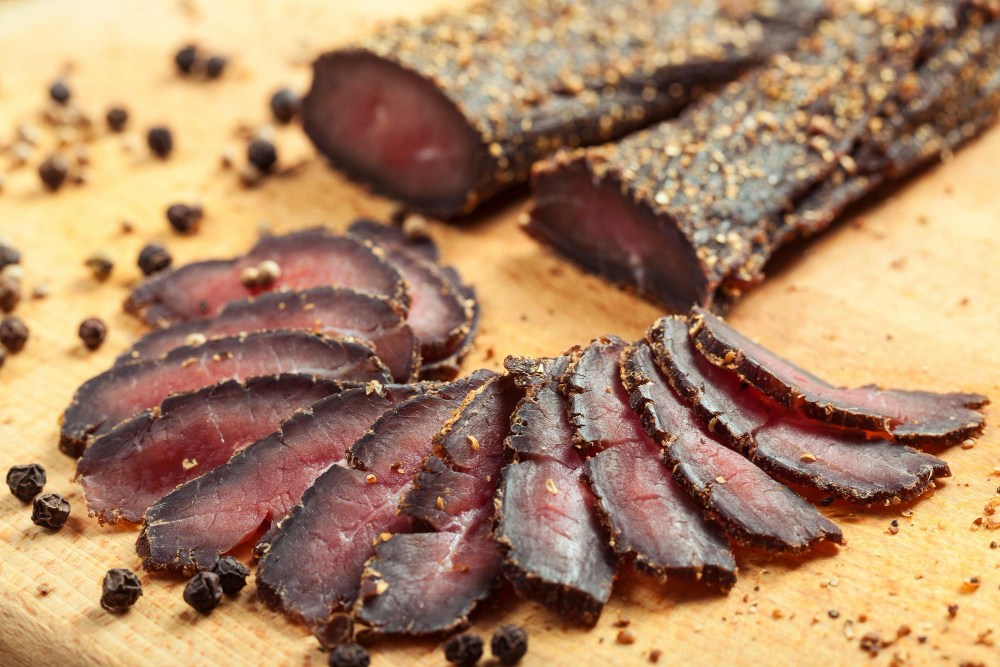
Biltong is South Africa's air-dried, cured meat: strips of beef, game or ostrich seasoned with salt, spices such as coriander and black pepper, and usually vinegar, then hung up to dry slowly instead of being cooked. It is eaten just as it comes, in sticks, slices or chunks, and for a lot of South Africans in the UK it is the taste of home. It looks a bit like jerky, but it is made differently and tastes different.
What is biltong?
The Dictionary of South African English (DSAE) defines biltong as salted dried meat in strips, "usually lean beef, venison, or ostrich-meat, but sometimes other game, or fish". A 2017 review of biltong processing by Stellenbosch University food scientists lists beef, ostrich, game such as kudu, springbok and gemsbok, and even chicken among the meats used today.
Unlike some traditional dried meats, biltong is ready to eat straight from the bag. The Stellenbosch review points out that Brazilian charqui, for example, has to be desalted before it is eaten, while biltong needs no soaking, desalting or cooking. It is eaten as a cured, uncooked product.
It comes as whole strips, thin sticks, slices, bites and fiery chilli bites, either lean or with a layer of fat along one side.
Where the word biltong comes from
The name is South African Dutch. According to the DSAE, bil means buttock or rump, the part of the animal the meat was often taken from, and tong means tongue, after the long, narrow shape of the strips. The dictionary's earliest English quotation dates from 1815, and an 1827 account describes "narrow slices of beef salted and dried in the sun", which is still a fair description two centuries later.
The method is older than the word. The Stellenbosch review notes that the indigenous peoples of southern Africa had their own ways of salting and drying meat before European settlers arrived, and that the settlers are said to have adopted the practice and added vinegar and spices. The spices were plentiful in the Cape Colony, and the vinegar was made from the grapes of the French Huguenots. Later, the Voortrekkers cured and dried meat for up to two weeks and wrapped it in cloth to carry on their journeys inland.
For more words like it, see our guide to South African slang explained.
How biltong is made
There is no legal definition of biltong and no single method, which is why every butcher's biltong tastes a little different. The broad process, as described in the Stellenbosch review, goes like this:
The cut. Lean whole muscles are trimmed of connective tissue and cut into long strips, traditionally along the grain. Topside is the favourite, with silverside, thick flank, eye of round and fillet also popular.
The cure. The strips are salted and spiced, usually with coriander and black pepper and sometimes brown sugar, and very often with vinegar. Brown spirit vinegar and apple cider vinegar are the most common. Traditionally the meat then rests for about a day to take up the cure.
The drying. The old way was to hang the strips outside in the shade for one to two weeks, usually in winter, when the temperature, humidity and wind were right. Many people now use a small biltong box with a fan and a light, while commercial producers dry it at low temperatures, usually 25 to 30°C.
The finish. Biltong is usually dried until it has lost at least half its weight, then sold whole, sliced or in chunks.
The salt and vinegar do more than add flavour. Salt locks up the water that microbes need to grow, and vinegar lowers the pH of the meat, which also helps hold them back. Modern makers follow the same principles at their own pace: Ember, whose founders grew up on a family farm in Suffolk, says its Original biltong is marinated, seasoned and cured for eight days (as of October 2026).
Every family has its own biltong method, and we are not going to settle that argument here. If you want to swap recipes or find Saffas near you who take their biltong seriously, download Howzit, the free app for South Africans abroad.
Biltong vs jerky: what is the difference?
Biltong and jerky are both dried, seasoned meat, but they are not the same thing. The Stellenbosch review explains that jerky, the North American snack, is dried at higher temperatures, around 60°C in one study, so both the process and the end product differ. It also calls the use of vinegar in the cure another unique feature of biltong.
Here is how the two compare, based on the review and on UK product listings as of October 2026:
FeatureBiltongJerkyOriginSouthern AfricaNorth AmericaDryingAir-dried slowly at low temperatures (commercially 25 to 30°C)Dried with heat, for example at around 60°CCureSalt, spices and usually vinegarSalt and a seasoning marinadeSmokeNot part of the traditional methodOften smoked or smoke-flavouredSugarLittle or none: some spice mixes use brown sugar, some makers add noneOften sweetened
The labels make the sugar point clearly. As of October 2026, the Muscle Food listing for Jack Link's Beef Jerky Original puts sugar second in the ingredients after beef, at 12g of sugars per 100g, along with a nitrite curing salt and smoke flavouring. Ember describes its own beef jerky as lightly smoked and marinated "for a subtle sweetness". The Original Biltong Company, by contrast, says its Original biltong is made with coriander, black pepper, vinegar and salt, with no added sugar and no nitrates.
In practice, biltong tastes tangier, from the vinegar, and if you buy it wet it can be properly moist in the middle. Calling it "South African jerky" in front of a Saffa is a good way to start a debate.
Is biltong healthy?
Biltong is high in protein, because drying concentrates the meat. The Original Biltong Company, for example, says each 25g bag of its Original biltong contains 16g of protein (as of October 2026), and it describes the product as naturally low in carbohydrate and sugar.
The catch is salt. The final salt content depends on the recipe and how dry the biltong is, but the Stellenbosch review found that most biltong ends up at 4 to 8% salt. That works out at roughly 1 to 2g of salt in a 25g bag. The NHS says adults should have no more than 6g of salt a day, so a single bag can use up between a sixth and a third of that.
Biltong also counts as processed meat. The NHS defines processed meat as any meat preserved by smoking, curing, salting or adding preservatives, and says eating too much red and processed meat probably increases your risk of bowel cancer. Its advice is that if you eat more than 90g of red or processed meat a day, you should cut down to 70g. None of that means giving up biltong, but a daily bag counts towards the total in the same way bacon or ham would.
If you are pregnant, take extra care. The NHS does not mention biltong by name, but its guidance on foods to avoid in pregnancy says cold cured meats such as salami and chorizo should be cooked until steaming hot, because cured meat carries a small risk of toxoplasmosis and cold cured, ready-to-eat meats may contain listeria. Biltong is cured and eaten uncooked, so ask your midwife or GP before eating it.
Wet or dry, fatty or lean: choosing your biltong
Walk into a South African shop in the UK and you will often be asked how you like it. Some specialists, such as Billy Tong in Cobham, cut biltong to order wet, medium or dry (as of October 2026). There is no official line between wet and dry. The Stellenbosch review cites one study that classed biltong with 21.5 to 25.3% moisture as dry and 35.1 to 42.8% as moist. Wetter biltong is softer, while dry biltong snaps and keeps for longer, because the more moisture it holds, the shorter its shelf life. Fat is personal too, though ostrich and most game make naturally lean biltong.
If you prefer a sausage, there is droëwors. The name is Afrikaans for "dry sausage" (droë, dry, plus wors, sausage), and the DSAE defines it simply as an air-dried sausage, salted and spiced.
Once a pack is open, follow the maker's storage advice. Moist biltong needs more care than dry. The Original Biltong Company, for instance, says to eat its packs within 48 hours of opening or keep them in an airtight container in the fridge.
Biltong in the UK
Biltong has travelled well beyond South African kitchens. The Stellenbosch review lists the UK among its international markets, alongside Australia, New Zealand, the USA and Canada. Susmans, which says it has been making biltong since 1979, produces it in Newhaven, East Sussex, and UK snack brands such as Ember now sell both biltong and jerky.
You will also find it on menus. As of October 2026, High Timber lists homemade biltong among its nibbles and Kudu has Kalahari spiced biltong on its dinner menu; for more, see our guide to South African restaurants in London. For a proper supply, our guide to South African shops, butchers and biltong in the UK lists makers from Surrey to Scotland, many of which deliver.
Frequently asked questions
Is biltong raw meat?
Biltong is not cooked, but it is not raw in the way a fresh steak is. The meat is cured with salt, spices and usually vinegar, then air-dried until it has lost at least half its weight, which preserves it and makes it ready to eat.
Is biltong healthier than jerky?
It depends on the product. Biltong is often lower in sugar, because many jerkies are sweetened while many biltong makers add little or none. Both are high in protein, both are salty, and both count as processed meat under NHS guidance, so compare the sugar and salt per 100g on the labels.
What are the ingredients in biltong?
Traditional biltong is just meat, salt, spices and usually vinegar. Coriander and black pepper are the classic spices, sometimes with a little brown sugar, and lean beef, venison and ostrich are the usual meats. Some commercial biltong also contains preservatives, so check the label.
Is biltong allowed in the UK?
Yes, and plenty of UK makers produce it. What you cannot do is bring it back from South Africa: as of October 2026, GOV.UK says you cannot bring meat or meat products into Great Britain from countries outside the EU, and biltong and droëwors are meat products. Buy it from a UK shop instead.